
BART Energy Blog
How to Plan Propane Supply for a Working Farm
A working farm does not use propane the way a house does. The load is bigger, it sits in buildings nowhere near each other, and the weeks you need it most are the weeks the roads are worst. Planning it out is an afternoon with a notebook.
- What you will need. Last season’s delivery records, a gauge reading from every tank, and a list of what each building runs.
- How long it takes. An hour at the kitchen table, plus a walk around the property.
- Difficulty. Easy. Planning work, not equipment work, and none of it needs a tool.
- Safety first. Read gauges and write numbers down, nothing more. Never open, adjust or repair a tank, regulator or gas line yourself.
What Farms Around Here Run on Propane
Before you size anything you need an honest list of the loads. Propane is usually doing four jobs, and only one is obvious.
Livestock, Barn Heat and Shop Heat
Barns, milk houses, brooding spaces and the shop where equipment gets fixed on the coldest days. Steady loads, and the ones everybody remembers.
Greenhouses and Season Extension
A high tunnel turns a mild March into a productive one by burning fuel. Easy to underestimate, because a heated growing space can burn more propane in six weeks than the farmhouse does all year.
Crop Drying and Processing
Grain, hay and hemp drying, plus the hot water behind any washing or bottling operation. It lands in a narrow window at harvest, and it lands hard.
Standby and Backup Power
A generator holding up a milking parlor, a well pump or a cooler draws from the same tanks as everything else.
How to Plan Your Propane Supply in Six Steps
Step 1. List Every Propane Load on the Place
Walk the property and list every appliance that burns propane, building by building. Include the seasonal ones, the generator, and anything a previous owner installed. Done right, you have one list on one page with no guesses on it.
Step 2. Turn Last Season Into a Real Number
Add up what you actually took last season from your delivery records. Two seasons beats one, because the second shows which part was weather and which part was the farm. Done right, you have a total you can defend rather than a feeling about it.
Step 3. Find Your Peak Week
Mark the heaviest stretch of the year, not the yearly average. Farm propane use is not flat. It is a few brutal weeks with quiet months either side, and an average hides the number that matters. Done right, you can name the weeks you are most exposed.
Step 4. Size Storage to the Peak, Not the Average
Work out whether your storage carries that peak stretch with a margin, and count how many separate tanks a driver has to find. One larger tank usually beats several small ones scattered around: fewer fills, fewer places to run dry, a shorter stop. Done right, you know whether storage or access is the constraint.
Step 5. Walk the Route a Loaded Truck Takes
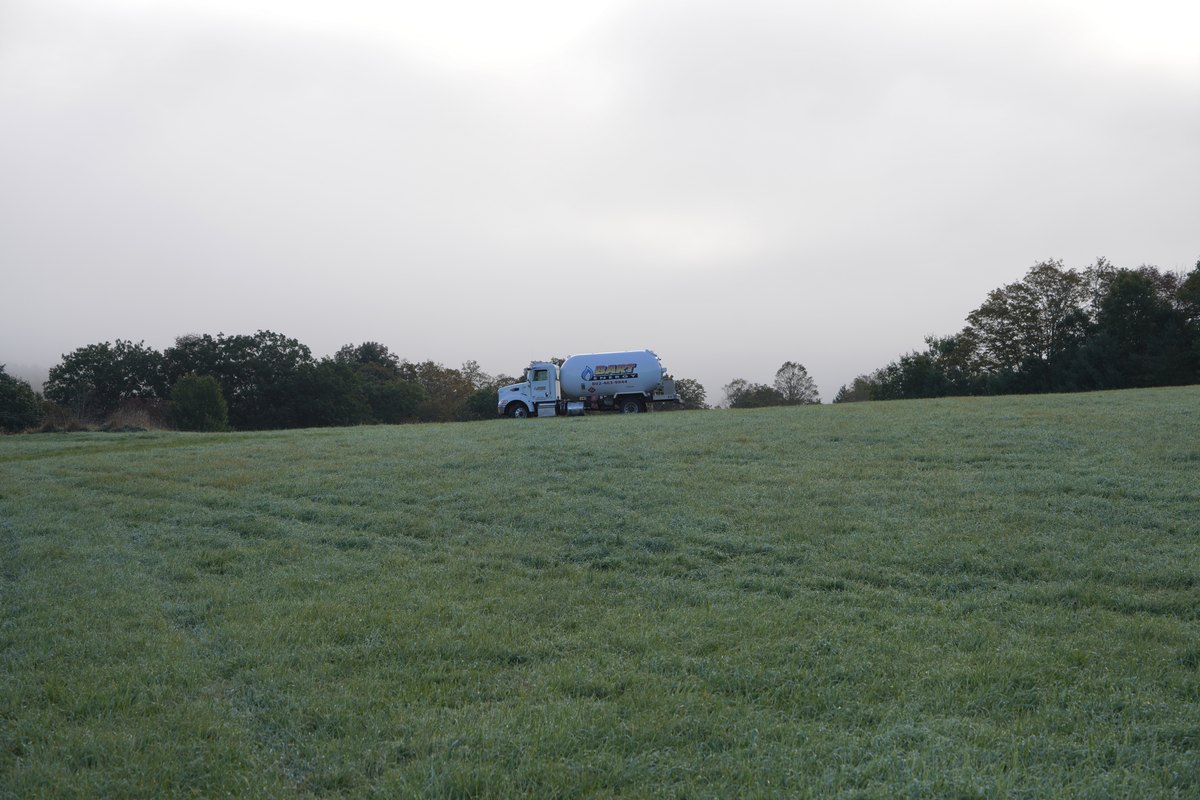
Walk the path a full bobtail would take to each tank, thinking about March rather than July. Look at the grade, the turnaround, the gate, the soft spot that holds water, and how far the hose must reach. Done right, you have a short list to fix in the dry months.
Step 6. Decide How You Want to Be Filled
Choose between automatic delivery and will call, and tell us which. On automatic we watch your usage and the weather and come before you get low. Will call suits an operator who reads their own gauges. Done right, both of us know who is watching that tank.
Why On Site Storage Matters in a Cold Snap
Every step above is your half of the problem. The other half is where the propane comes from when everybody wants it at once.
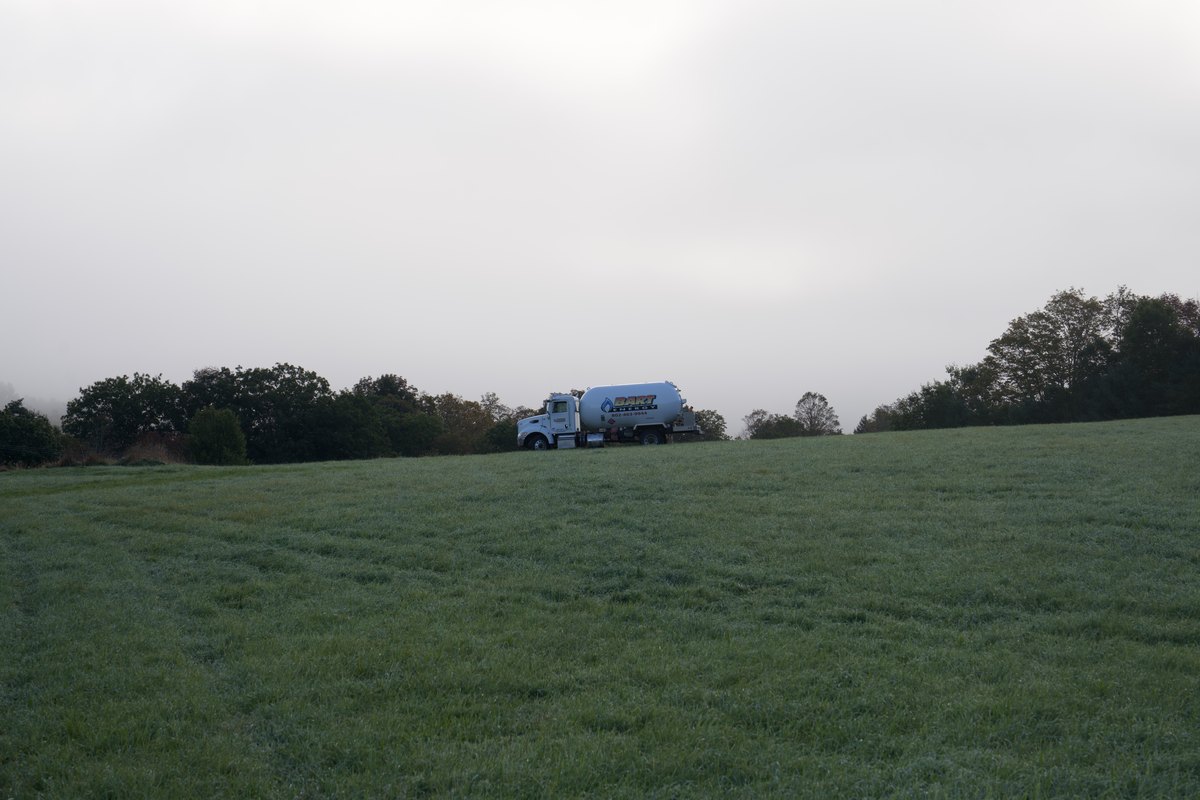
We keep sixty thousand gallons of bulk propane on our own lot at Transport Park in Bellows Falls. That is the difference between a supplier who already has the fuel and one queuing at somebody else’s terminal behind every other dealer.
When to Stop and Call a Professional
All of the above is planning work, and planning work is yours. The gas itself is not.
- Any smell of gas. Leave the building, stay away from switches and ignition sources, and call from elsewhere.
- Anything on the gas side. Regulators, lines, fittings, valves and appliance conversions are licensed work.
- Moving, adding or resetting a tank. Placement is governed by code and clearances, and a tank in the wrong spot is a problem for years.
- First start up of a heater that has sat idle. UVM Extension has a good plain English walk through of what to check on a greenhouse or high tunnel heater.
Our technicians service the equipment we deliver fuel to, outbuilding and shop heat included, so a propane appliance problem here is one phone call and not two. See our heating equipment services, or call (802) 463-9944.
Common Mistakes on Farm Propane
- Planning off last year’s total instead of last year’s worst week, the number that actually runs you out.
- Forgetting the loads that burn for only a few weeks, like a tunnel in spring or a dryer at harvest.
- Adding a heater, a tunnel or a barn and never telling anybody the load changed.
Questions We Get From Farm Customers
How much storage does a working farm need?
There is no single answer, and anybody who gives you one without looking at your operation is guessing. It comes out of your peak stretch and your delivery access.
Should I own my tank or lease one?
Both are common on farms around here and both work. What matters for planning is knowing which you have, how big each tank is, and who is responsible for it.
Is automatic delivery or will call better for a farm?
It depends how much your load swings. Automatic suits an operation whose demand spikes for a few weeks. Will call suits an operator who tracks their own tanks.
What if everybody wants propane at once?
That is the week the supply behind your supplier stops being an abstraction. Ours is already on our own lot rather than waiting in line at a terminal.
Get Your Farm’s Propane Sorted
We are a family owned company delivering heating oil, propane and diesel across southern Vermont and western New Hampshire, from Putney and Dummerston through Chester, Springfield, Londonderry and Weston, and across the river into Walpole and Claremont. A good part of our book is farms, and we fill the outbuildings, the shop and the growing spaces on the same run as the house.
Do the walk, write the list, then tell us what you found.
Talk to BART Energy
We are a brother and sister run fuel and service company working out of a former freight terminal in Bellows Falls. We deliver heating oil, propane and off road diesel, and our own technicians look after the equipment it all runs through, for homes, farms and businesses across southern Vermont and western New Hampshire.
Not sure we reach you? Check the service area.
BART Energy4 Transport Park
Bellows Falls, VT 05101
(802) 463-9944 Propane Delivery
Questions About Your Fuel or Your Equipment?
Talk to a local person who knows these roads. We deliver heating oil, propane and diesel across southern Vermont and western New Hampshire, and we service the equipment too.