
BART Energy Blog
How to Get Your Home Heating System Ready for a Vermont Winter
Heating season in southern Vermont has a way of starting before the calendar says it should. The first genuinely cold night usually arrives well ahead of the first steady stretch of cold, and it is the first real test your boiler or furnace has faced since April. Almost everything that goes wrong on that night is findable in September. Here is what to check, what you can handle yourself, and what needs a technician.
Why the Pre Season Check Matters More in Southern Vermont
Homes in Bellows Falls, Chester, Springfield and across the river in Walpole and Claremont ask a lot of their heating equipment. The season is long, the cold is real, and much of the housing stock in this valley is older than the systems heating it.
What a Cold Snap Does to a System That Has Sat Idle Since April
Your boiler or furnace has been sitting still for five or six months. Dust has settled on the burner, a filter that was already marginal last season is worse now, and seals have had a summer to dry out. None of that matters while the system is off.
Then the temperature drops twenty degrees overnight and the system goes from doing nothing to running hard, with no warm up in between. That is when a marginal part stops being marginal, and it is the most common reason a system that seemed fine in spring will not fire in fall.
The Failures That Are Cheap in September and Expensive in January
A clogged filter, a worn nozzle, a lazy circulator pump. Caught in early fall these are ordinary maintenance items, handled in daylight with the parts on the truck. The same parts found at ten o’clock at night in a cold snap are an emergency in a house that is already losing heat.
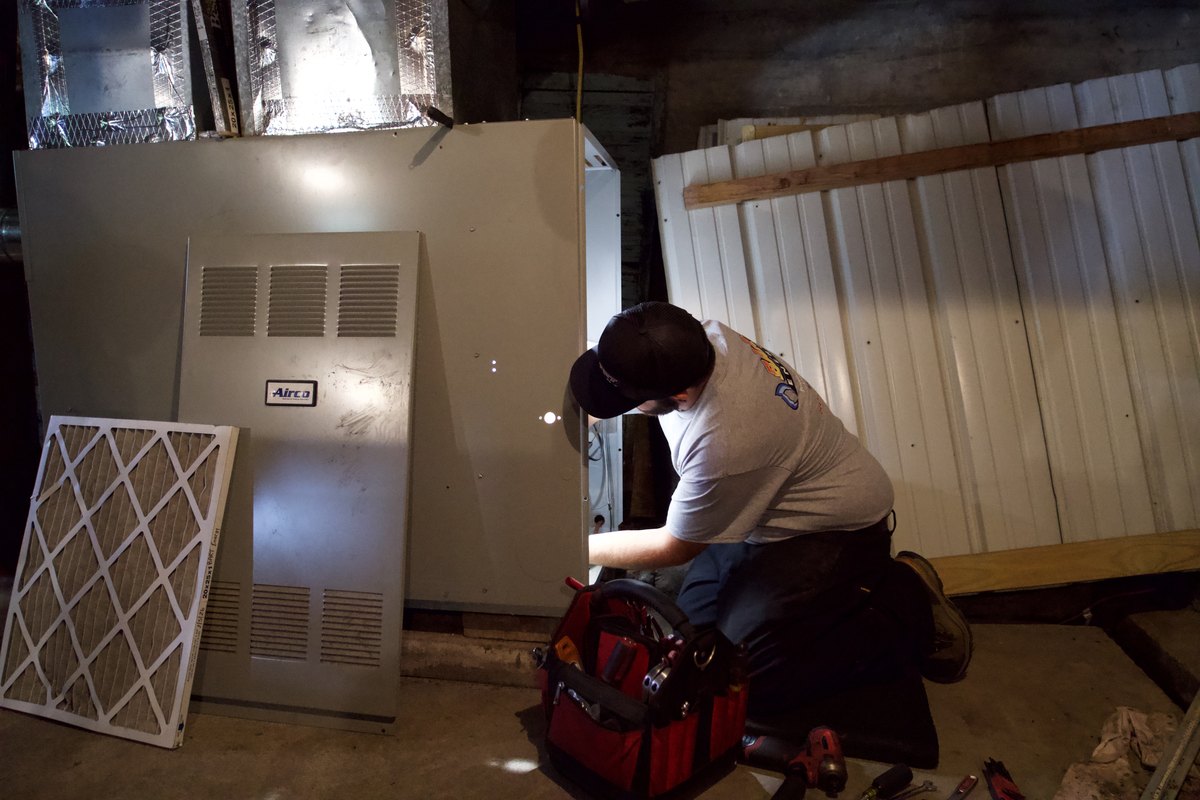
Your Pre Winter Checklist
Work through this before the first cold night. Most of it takes minutes, and none of it needs tools you do not already own.
- Replace or clean the air filter. On a forced air furnace a loaded filter chokes airflow and can push the system into short cycling.
- Clear the space around the equipment. Fuel burning equipment needs combustion air, and a technician needs room to work.
- Open and unblock every register and return. Closing vents in unused rooms does not save fuel the way people expect, and a couch against a cold air return throws off the whole system.
- Test the thermostat and change its batteries. A dead battery is one of the most common no heat calls there is, and a two minute fix if you get to it first.
- Test every smoke and carbon monoxide alarm. Any appliance that burns fuel makes this one non negotiable.
- Read your tank gauge and write the number down. Starting the season low means your first cold snap and your first delivery compete for the same week.
- Clear the path to your fill pipe. A driver still has to reach the fill once snow arrives, so think about where the plow will push it.
- Run the system through a full cycle on a mild day. Odd smells, new noises and a system that will not light are far better problems to have at two in the afternoon in September.
What You Can Handle, and What Needs a Technician
That checklist is deliberately all homeowner work, and if you do nothing else this fall, do those eight things. The next part is not homeowner work, and the line is less about difficulty than about instruments and safety.
What Needs a Technician
A real pre season service is not a visual inspection. It covers what you cannot assess from the outside:
- Burner and heat exchanger inspection, including cracks and corrosion that are invisible with the cover on.
- Combustion testing, putting an analyzer on the flue to measure what the system is doing rather than judging it by sound.
- Efficiency adjustment, so it is not burning more fuel than it needs to for the heat you get.
- Safety checks on the flue, the draft and the shutoffs.
Those need training and calibrated instruments. If you want to understand what your equipment is doing before that visit, the U.S. Department of Energy’s home heating overview is a good plain English primer.
Our technicians install, repair and maintain the equipment we deliver fuel to, including boilers, furnaces and outbuilding heat. To get a pre season check on the calendar, call (802) 463-9944.
Getting Your Fuel Supply Ready at the Same Time
Equipment and fuel are one problem, not two. The best tuned boiler in this valley is useless attached to an empty tank.
Check the Tank and the Gauge Before You Need It
Note your gauge reading somewhere you will see it again, then check it again in a few weeks. Two readings tell you your rate of use, which is far more useful than one. While you are down there, look at the tank itself. Rust streaks, damp spots, or legs that have settled are worth telling us about early, because a tank problem found in September is a scheduled job and the same problem in February is not.
Automatic Delivery Versus Will Call
On automatic delivery we watch the weather and your usage and come before you get low, so most people stop thinking about it. On will call you tell us when you want a delivery, which suits people who watch their own gauge, and homes that run on alternative heating and use oil alongside it. Neither is better in the abstract, but you want to know which you are on before the roads get bad. If you heat a barn, a shop or another outbuilding, count that in too.
What Happens If You Wait
Nothing dramatic, usually. That is exactly the problem. A system that skipped its check does not fail on a mild day in October. It runs, a little worse each week, until the coldest night of the year asks it for everything at once. That is the night it quits, and it is the same night every other household in the valley with the same story is calling too.
Waiting also takes away your choices. In September a technician who finds a failing part can order it, schedule the work, and do the job properly. In January that same finding turns into whatever can be made to work tonight.
Questions We Get About Getting Ready for Winter
How often should a heating system be serviced?
Once a year is the standard recommendation for equipment that burns fuel, and before the heating season is the right time for it.
When is the best time to schedule a pre season check?
Late summer through September. You want the work finished before you need the heat, not while you are waiting for it.
My system worked fine all last winter. Do I still need a check?
Yes. Wear builds up quietly, and the parts that fail first are usually the ones that worked hard for years without complaint.
What should I do if my system will not start when I test it?
Check the thermostat batteries, the power switch to the unit, and whether there is fuel in the tank. If all three are fine, stop there and call us rather than resetting the burner over and over.
Get It on the Calendar Before the End of September
We are a family company delivering heating oil and propane across southern Vermont and western New Hampshire, and our technicians service the equipment burning it. If your system has not had a look since spring, this is the easy time of year to fix that.
Talk to BART Energy
We are a brother and sister run fuel and service company working out of a former freight terminal in Bellows Falls. We deliver heating oil, propane and off road diesel, and our own technicians look after the equipment it all runs through, for homes, farms and businesses across southern Vermont and western New Hampshire.
Not sure we reach you? Check the service area.
BART Energy4 Transport Park
Bellows Falls, VT 05101
(802) 463-9944 Heating Equipment Services
Questions About Your Fuel or Your Equipment?
Talk to a local person who knows these roads. We deliver heating oil, propane and diesel across southern Vermont and western New Hampshire, and we service the equipment too.